What is a Shaft Coupling?
The shaft coupling is not only a mechanical component that firmly connects the driving shaft and the driven shaft in different mechanisms of your machine to transmit motion and torque, but also prevents the connected parts from bearing excessive loads and plays an overload protection role. Therefore, the first criterion for selecting a coupling should be "precision".
It can be classified into two type: Fexible Couping & Rigid Coupling.
- Rigid Coupling requires very high concentricty, no backlash during transmission
- Felxible Couplding don't need high concentricity, eliminates the concentricity problem
Frankhumotor supplies some typical shaft coupling as below.
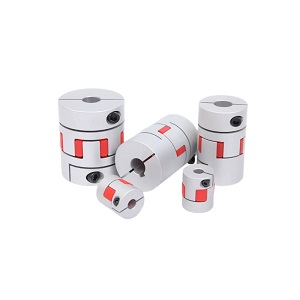
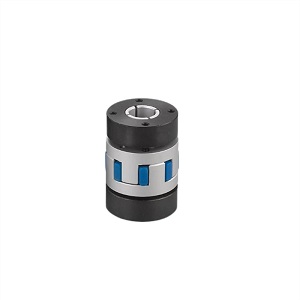
1. Flexible Jaw Coupling, also called Spider Coupling or Claw Coupling.
It has features of low to moderate torque, moderate-to-high speed, good electrical insulation, buffer the vibration, etc.
Jaw Coupling Clamping Jaw Coupling
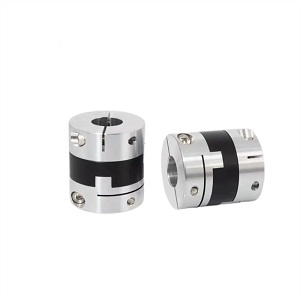
2. Oldham Coupling, also called Cross-slider Coupling.
It has features of exceptional parallel offset compensation, zero backlash, electrical isolation function
Please note an Oldham coupling is classified as a flexible coupling (more specifically, a mechanically flexible or movable rigid coupling). It gives you the best of both worlds for precision applications (like stepper or servo motor systems): it protects your bearings from parallel misalignment like a flexible coupling, but maintains the exact positioning accuracy of a rigid coupling.
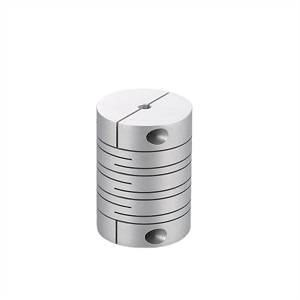
3. Parallel Slit Coupling, also called Tangential Coupling.
It has features of light weight, zero backlash, low inertial trqoue, high sensitivity, high torsional stiffness and outstanding misalignment compensation: The slits create a 'spring plate' structure that simultaneously accommodates radial, angular, and axial installation misalignments.
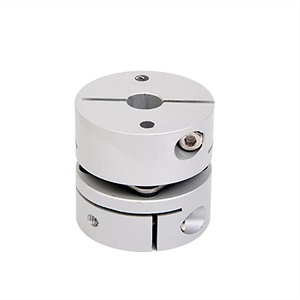
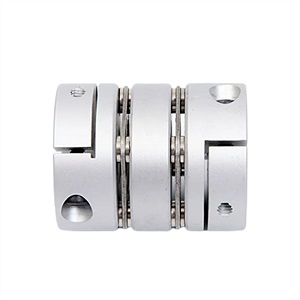
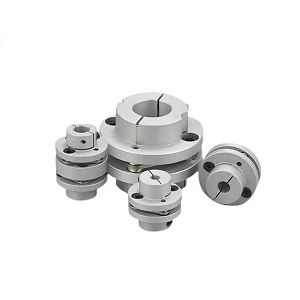
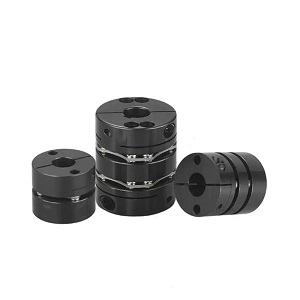
4. Diaphragm Coupling, also called Disc Coupling.
It has features of high misalignment compensation capability, superior shock and vibration absorption, high torsional stiffness & zero backlash
Single-Diaphragm Coupling Double-Diaphragm Coupling Flange Diaphragm Coupling C45 Steel Diaphragm Coupling
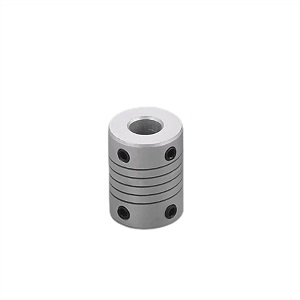
5. Beam Coupling, also called Helical Coupling
It has features of Zero Backlash, Excellent Misalignment Compensation(Angular misalignment, Parallel/Radial/Axial End Play misalignment), Low Bearing Loads, Maintenance-Free and Durable.
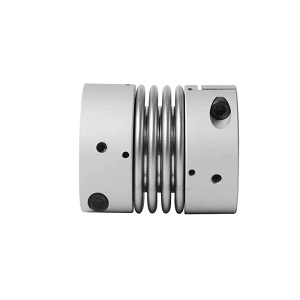
6. Bellows Coupling
It has features of High Torsional Stiffness, xcellent Misalignment Compensation(Radial Offset/Angular/Axial End play misalignment), Low Inertia, High Temperature and Chemical Resistance, Infinite Life (Wear-Free).
7. Rigid Coupling
Rigid couplings are the simplest types of couplings used to connect two shafts together perfectly in line. Unlike flexible couplings (like the diaphragm couplings mentioned earlier), they cannot accommodate any shaft misalignment.
- However, this absolute rigidity gives them several distinct technical advantages:
- High Torque Capacity & Power Transmission
- Maximum Torsional Stiffness (Zero Backlash)
- Simplicity and Low Cost
- High RPM Capability (When Perfectly Aligned)
- Support for the Shafts

Overall, Flexible Coupling is more popular, during manumacturing or assembly, the concentricity of two shafts isnot always good. Rigid Coupling is used to eliminate tolerances and achieve high precision transmisson.